
Linear Equations Activities: How to Teach Linear Equations to Students Who Struggle with Math


In my work with math intervention for middle and high school, I’ve found that most of the struggles with linear functions is because students struggle with the basics and foundations that graphing linear equations is built upon.
This post will explore my 6 step Just In Time intervention progression to get students doing grade level linear equations activities even if they’ve struggled for years with math.
Step 1: Plotting Points
We start here because we cannot assume this skill is mastered. If a student mixes up the x and y axes or can’t plot a point, they won’t see much success with graphing a line. By mastering plotting points first, we give them the literal "map skills" they need to move forward without getting frustrated by the basics later on.
To make this foundational step more accessible, I love using an Ordered Pair Digital Drag and Drop Activity. It allows students to interact with the coordinate plane in a low-stakes, visual way, helping them build spatial awareness before they ever have to pick up a pencil to graph a full equation. This kind of immediate, hands-on practice is exactly what helps bridge the gap for students who typically find the coordinate plane intimidating.

Step 2: Slope-Intercept Form (y = mx + b)
Once they can plot a point, we introduce slope intercept form in a basic sense so that they understand where we are going. We focus on identifying the pieces—what is the starting point (y-intercept), and what is the change (slope)? Using matching activities here helps students recognize the structure before they have to create it themselves.
A great way to build this recognition is through an I Have, Who Has: Slope-Intercept Form activity. It turns the "skeleton" of the equation into a collaborative game, requiring students to listen to the components of an equation and identify their own matching card. It’s a powerful tool for building verbal math fluency and ensures that every student is actively participating in the identification process.

Step 3: Mastering Slope
Slope is notoriously difficult for students who struggle with math.
To deepen this understanding while students are learning how to calculate slope, I love using a Same and Different: Linear Equations & Graphs Activity to get students talking in math. Students compare different graphs and equations to identify what they have in common—like a shared y-intercept or the same steepness. This compare and contrast approach that is naturally built into Same and Different is a great way for students who struggle with math to enter into the conversation because it forces them to look at the features of the graph, helping them catch their own mistakes and build a more intuitive sense of how slope works.

Step 4: Graphing Linear Equations in Slope Intercept Form
Now we put Step 1 and Step 3 together. Students take a starting point (the intercept) and use their slope skills to move across the graph. This is where the visual and kinesthetic nature of linear equations activities really pays off—they can physically see the line growing.
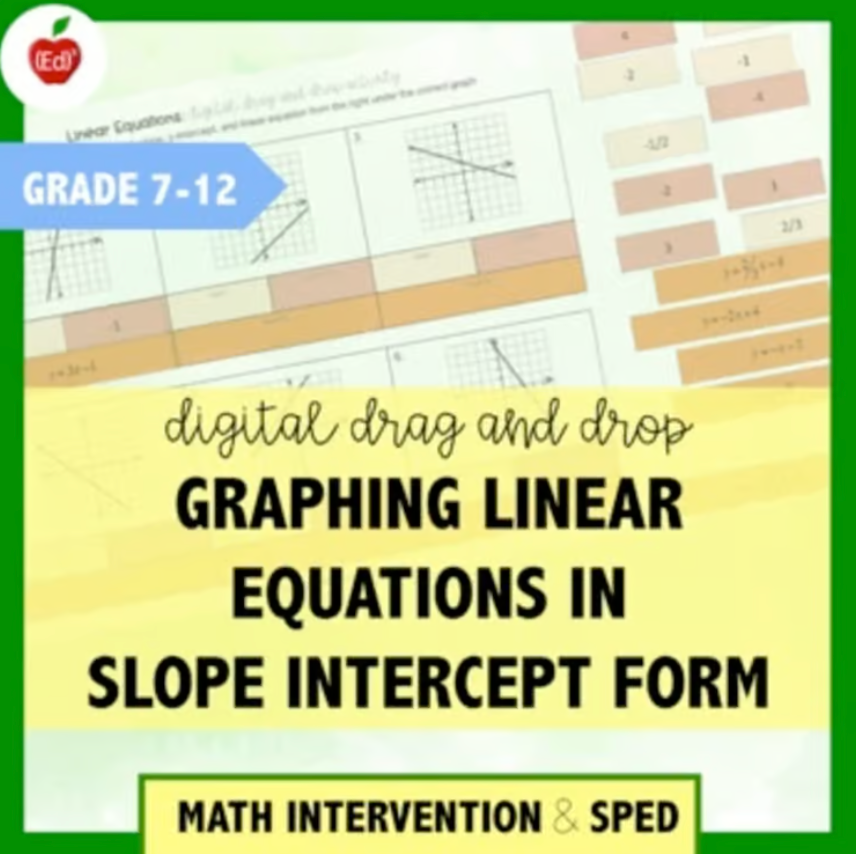
I recommend this Graphing Linear Equations Digital Drag and Drop. It’s particularly effective for students who need kinesthetic learning opportunities. Students drag and drop 3 things with each of 6 graphs: slope, y-intercept, and linear equation strips. This tactile approach removes the frustration of "wrong" pencil marks and keeps them focused on the relationship between the numbers and the graph.
Step 5: Standard Form
It’s important for students to understand that slope intercept and standard form are graphing the same line. Remind students that they aren’t doing something totally different, they are still graphing lines, but sometimes the lines are written in different ways.
To help students bridge the gap between these different presentations, I use this Slope-Intercept Form Matching Activity. It allows students to match graphs with equations written in both standard and slope intercept form to strengthen their understanding that these are the same thing, just in different forms.

Step 6: Linear Word Problems (The Context)
Notice this is the last step. Because we built the skills in steps 1-5, the word problems no longer feel impossible. Students finally have the tools to translate the story into an equation because they already know how the equation works.
To make this transition as smooth as possible, I recommend this Linear Equations From Word Problems Matching Activity. Instead of staring at a blank page and a paragraph of text, students are given the equations and word problems to match together. This scaffolded choice allows them to focus on the language of the problem - identifying the starting amount and the rate of change - without the overwhelming pressure of creating an entire equation from scratch.

Get the Complete Roadmap
Stop the worksheet fatigue and give your students a way to actually master linear functions. You can find every activity mentioned in this post in the Linear Equations Bundle and more! It’s a complete, ready-to-use toolkit designed to take the stress out of your Linear Equations unit.

Want more intervention secrets?
Join my free Math Intervention Masterclass and learn the exact strategies I use to help struggling learners thrive in 6-12th grade math.


Comments